It’s just a question that’s been bugging me…
Tag: Multimedia Me
-
Are they just trying to alienate me? – Primeval – Series 3, Episode 5 – Review – Spoilers
I’ll never look at athlete’s foot the same way again.
Synopsis
Rich Sir Richard has a groovy pad in the city overlooking the Thames, his subordinate can’t tell the difference between a piece of modern art and anomaly. He’s sucked into another time but not before he deposits spores he’s been infected with on the floor. The anomaly disappears, trapping him – presumably forever.
Sir Richard later touches the spores and becomes infected, heading into the busy, yet picturesque, St. Pancras train station.
Back at the ARC, Conner’s little pets have chewed a cable, deactivating the anomaly detector. Once reconnected it registers the now-closed anomaly, which the team investigates. Conner takes a sample of the spores back to the ARC. At the same time, Danny Quinn breaks into the ARC trying to join the team.
At the ARC, Conner discovers the spores are virulent and contains them in the new environmental greenhouse.
Christine Johnson arrives at the ARC, looking for the artifact. Lester denies any knowledge of it. While Lester is distracted, Christine’s people snoop around and one becomes infected with the spores. When Conner and Danny try to rescue him, it’s too late. At first they think he is dead, but then he resurrects as a walking fungus monster. Conner thinks he kills the creature with heat and Danny, now somewhat improbably trusted with the task, heads to St. Pancras with flame throwers to destroy the creature Sir Richard has become.
Conner then learns heat helps the fungus spread and that freezing cold is the answer.
Danny captures the creature and brings it back to the ARC, where they’ve laid a freezing trap.
Jenny is nearly killed by both the creature and the freezing cold, but in the end (barely) survives. So, she quits the team and Danny is put in charge.
Analysis
Just another day in the completely illogical world of Primeval.
I’m not going to ask questions like, “What kind of life cycle does this fungus creature have? What does it gain by morphing into a man-like monster? What was the monster trying to do? Was it going to do the nasty with Jenny or was it just going to explode and spore on her? What kind of environmental pressures and conditions would lead to such a fungus to evolve? How did a walking collection of fungus make noises? It seemed like very little of Sir Richard was left, did it still have lungs? Why?”
OK, I’ll ask that question. WHY? WHY? WHY?
But most of all I’ll ask, “Why are they trying to ruin the show by having Jenny leave?” They’d just got her back to being Claudia-like and now she’s gone. Does anyone else buy this whole, “I used to be Claudia Brown now I don’t know who I am” nonsense? Obviously she doesn’t get it. No, she was never Claudia Brown. She is a genetically identical person in a different timeline. She’s no more Claudia Brown than identical twins are the same person.
At least Lester is getting a few good lines. He’s going to need them, pretty soon he’s going to have to carry the show by himself.
Here’s another one that frightens me, Abby’s little brother, Jack. So, what’s his point for being in the show? You never pay money for an actor/character if you’re not going to use them. Is it just to get Conner into a new apartment, and why would they want to do that. Surely Conner’s place for living is irrelevant. Is Jack going to be the next newest team member or is he going to be be eaten by something nasty so that Abby can decide to leave the team, too? Or… oh, no, no, no… what if Abby is killed and he takes her place on the team. That’s really adding insult to injury!
Here’s a couple things to throw out just to nit pick (and to avoid really tearing into the fungus monster). Detector? Cable chewed through? No alarms are sounded and yet, somehow the recording device still worked? I guess that idea is OK if you think of the equipment like a VCR, which typically traps the signal before reaching the final destination (the TV), but that’s not typically how ad-hoc devices like the anomaly detector are thrown together, which would do primary function first (hence the name, “primary“) and recording for analysis second.
This is a perfect example of what I mentioned in my previous review. Plot-wise, they’ve buttoned themselves into a corner. Without a stupid happening like this cable incident, they know too much, too soon about the appearance of the anomalies to tell a story that requires a “stealth” invasion through an anomaly. From now on – if there is an “on” in the future – we’re going to be subjected to an unavoidable stream of technical faults, accidents and sabotage to move the plots along.
Here’s another one: What’s that environmentally-controlled greenhouse room for? I mean apart from it’s immediate, one-time, disposable need in this particular episode? Has there ever been any indication that the ARC is attempting to collect samples from the past for research? The only specimens that I’m aware of are those that have become trapped – typically, they ones that come through and get trapped are not plants.
So here’s my last thought, my last glimmer of hope for Primeval not that both Jenny and Claudia are gone. The producers have done something admirable this year, they’ve eliminated the characters slowly, rather than waiting for the season finale. That’s depressing, because their “end” comes sooner, but plot-wise, it’s more dramatic and surprising, because everybody knows that characters (and more specifically actors) leave at the end of the season, not in the middle.
But why is that? It’s because television is a structured environment, actors are hired, usually, for whole series/seasons – typically, they’re paid for it even if they’re written out early – consequently, they’re not written out early.
I said “glimmer of hope,” didn’t I? Yes, I think we can actually count on that structure to return Jenny (or perhaps even Claudia), and even Cutter and maybe even Stephen for the series finale in about 2 or 3 episodes time. It’ll be a final farewell, and it will obviously have to involve some jiggery-pokery with the timelines again – which will perhaps “fix” some of the plot traps they’ve built into this timeline – assuming the series continues.
I wonder if it is significant that Quinn and Cutter never met?
-
The Mighty Quinn – Primeval – Series 3, Episode 4 – Review – Spoilers
Danny’s back. Now there’s a surprise. (Not)
Synopsis
The devastated team keeps working after Cutter’s death, the ARC is being rebuilt. Lester’s nemesis is revealed (to the audience) to have not only a captive future predator, but an anomaly all her own – one that has a “cloaking device” keeping the ARC people from finding it.
Meanwhile, the reporter causes problems and steals a detector, allowing him and a camera crew to arrive first at an anomaly appearance.
Out from the anomaly comes a giganotosaurus, a giant Cretaceous theropod. He eats some people – even that guy from Chased by Dinosaurs and Prehistoric Park – attacks a plane and generally causes a nuisance.
Conner and crew battle the creature, and have their bacon pulled out of the fire by Danny Quinn, who has been following them.
Conner succeeds in locking the anomaly, and it appears the nosy reporter people are killed.
Analysis
I’m really not happy that the actor portraying Danny Quinn has been billed as the first name on the credits. Surely he’s not to be the new star or the show and leader of the squad? As previously pointed out – he’s totally unqualified to be anything but a gunman/detective. They proved to us that Cutter’s art sculpture could predict anomalies, meaning they aren’t random and now they tell us Cutter didn’t bother to explain it to anyone, so the secret is lost. I don’t think Danny Quinn is going to piece it together, that’s for sure.
Although it appears that the reporters are squashed under the giganotosaurus’ feet, in the next shot, the floor underneath is remarkable clean and reporter-smear free.
Here’s a question. Just as the anomaly opened, why did the shipping crate shake around? Was that from magnetic force, or something else inside it? Why then did the giganotosaurus happen to attack the airplane that was carrying that same crate? What possible interest would a plane be to it?
Has no one on the team noticed that this series, for some reason, the anomalies are now “sized” to match the creature that comes out of them? First the little tiny anomaly for the diictodons and now the giant one for the giganotosaurus. Unless that’s just bad production design, it must mean that there’s some advanced thought that goes into the opening of an anomaly, but by whom or what? And wouldn’t that invalidate the notion that Cutter’s model was accurate?
Actually, it seems that the series has been cornered into an ever-restricted space. Consider: Originally, they didn’t know when an anomaly opened, they didn’t know where they opened, they didn’t know what came out of them and there was nothing they could do with them.
Now they know immediately when one opens, they can track it, they can close it and they’ve already stumbled upon the secret to moving one – even if Conner hasn’t implemented such a device yet, it’s only a matter of time. Really, what’s left for them to do? Oh, I know, let’s throw in some secret government intrigue!
-
Primeval – Cut Down – Series 3, Episode 3 – Review (Spoilers)
I didn’t see that coming.
Synopsis
The story opens with Helen drilling her Clone Troopers and demonstrating that they are mindless zombies by having one kill himself.
A reporter who has been unsuccessfully on the trail of the anomaly story stakes out the ARC in the hopes of getting the biggest story of all time.
An anomaly opens in a London hospital, Cutter, Conner, Abby and Becker go to investigate. The reporter follows them.
Inside the hospital, a small anomaly has opened and a hatching of baby Diictodons have come through and are chewing through the hospital’s wiring. Posing as a doctor, the reporter nearly captures one of the creatures after he locks Cutter and Abby into an operating room with a pregnant mother and the anomaly.
Back at the ARC, Helen reveals her secret weapon. She has cloned Cutter and uses him to infiltrate the ARC and shut down its defenses. The Clone Troopers move in, plant explosives and capture the remaining members of the team.
After Abby births the baby, Becker frees Cutter and the anomaly closes, leaving two diictodons that were captured by Abby and Conner. The return to the ARC, where they are all quickly captured by Helen and her boys.
Helen reveals to Cutter her motives. The future has been destroyed and it was the ARC that bred the super predators that destroyed the world. She has decided to destroy the ARC and stop Cutter’s work to save the world. However, she thinks Cutter knows the secret of the artifact both she and Lester’s boss, Caroline Steel, were trying to retrieve from the future. Cutter feigns knowledge of the artifact to stall for time.
Back in their cell, Becker helps everyone escape and then he and Conner try to the PA system to play a faked recording of Helen’s voice. They’ve determined that she has voice control over the soldiers and plan to broadcast new orders to them.
The plan works and the soldiers stand down, Helen commands Cutter’s clone to destroy the building. The clones are not mentally the same as the original and Helen considers them to be “living machines”. While Helen escapes, Cutter tries desperately to convince his clone that he is a real person and should not give up his life. Although he cannot convince him to abandon his programming, the clone gives Cutter a chance to escape.
Everyone gets out except Helen and Cutter goes back into the burning building to save her. He finds her unconscious and hides the artifact before he wakes her up to save her. What he doesn’t expect is that Helen is as determined as ever to stop the destruction of the world and she fatally shoots Cutter and then escapes.
Conner re-enters the building to save Cutter but finds him dying. Cutter shows him the artifact and tells him he has to carry on without him. Cutter dies in Conner’s arms.
Analysis
Things are obviously changing in the series. It’s no more mystery now about the cop from the last episode – he is undoubtedly going to come join the team in Cutter’s absence. Will the ARC be rebuilt? Should it? With all the workers walking around the place, none of them seem to do anything. Will Lester’s new boss and her hidden agenda prevent them from rebuilding. Will our team become rebel good guys, hiding from the law, just like the A-Team?
I do like one thing the writer has done in the episode. Helen has been increasingly appearing to be the over-the-top diabolical crazy villain that appears to want to take over the world. If we can take things at face value, now it would appear that her agenda is to save the world. She simply differs with Cutter over our place in the grand scheme of things. Can we be agents of change in the future for good or must we face the future and accept it meekly?
Amusingly, Cutter is on the wrong side of that argument, but one wonders why Helen cares? Being that she’s seen the depth of time for herself, she must also understand that nothing can last forever – including herself, and while she might be able to change the future, she can never live long enough to guarantee that it continues to lead to a future she desires.
Still, it’s nice to see Helen slightly less one-dimensional. It’s a pity she’s obviously not read any time travel fiction, or watched Doctor Who or she’d realize that history isn’t always right. The predators won’t have been created by the ARC (although the might escape from there) they’ll be released somehow by the very artifact that she took to ARC, meaning, ultimately that she will be culpable in the downfall of man through her own actions to save it. History is probably wrong because of some ill-informed journalism by the reporter who is dogging the team now.
I’ve had my misgivings about the make-up of the team for some time, and Cutter’s death doesn’t bode well for the future. Consider the first series team, A Paleontologist (Cutter), a second Paleontologist with big game hunting experience (Stephen), a third paleontology student with some computer skills (Conner), a zoologist (Abby) and two mandarins (Lester and Claudia.) Not exactly a crack squad of experts, but at least they were there because they were Johnny-on-the-spot.
Series 2 gets difficult. Conner certainly seems to have changed his specialty, now seemingly an electronics whiz, but apart from the Claudia/Jenny fiasco, the team remains much the same. Basically unqualified to investigate temporal phenomena, despite the vast resources of the ARC, the team has added no experts in physics, for example, or any other field that might help.
Now, we’ve added Dr. Page, who, as professor of mythology is… sorry… worthless, and we’ve lost Cutter, the brains of the outfit. They’re going to bring back that cop, who, while perhaps handy in a firefight, will be worthless at figuring out anything about the anomalies.
It doesn’t bode well.
-
Time is Like Modern Art – Primeval – Series 3, Episode 2 – Review (spoilers)
If mythological creatures are manifestations of anomalies, are haunted houses, also?
Synopsis
14 years ago a magnificent house stands empty. Teenagers break in, but they don’t get out.
Back in the present, Cutter has used the data from Dr. Page’s research to build a new model of the anomalies, with it, he is able to make a prediction of a location for an anomaly. Jenny, Conner and Abby go to investigate. The site is the same house, still abandoned and now in disrepair. Something is still in the house, something fast and able to camouflage itself at will.
Adding to the mystery, a hard-nosed copper tries to keep the ARC team from researching the house.
Meanwhile, Helen steals Dr. Page’s access pass to the ARC and sends one of her clone troopers to steal Cutter’s clothes. The intruder is detected and killed. Cutter begins to get a glimmer when he recognizes the dead man as the same guy who was killed in the Silurian desert in series 2. And why does he want Cutter’s clothes?
Abby discovers a little girl who is feeding the creature back at the house. The girl does it so the creature won’t eat the neighborhood pets – or people.
A showdown happens at the house, just as an anomaly opens and, at first, the creature finally goes home – then it decides to come back and kill people, so the cop pops a few caps in its ass.
Analysis
There’s a lot going on in this episode, little of it good.
But first, let’s digress for a few moments and discuss brilliance. Brilliance is tough for some writers – perhaps most writers – because, by definition, brilliant people are difficult to follow for the average person. It follows that, if the writer cannot think brilliantly, it would be difficult to put thoughts in the head of a brilliant character. Difficult, but not impossible. Arthur Conan Doyle’s Sherlock Holmes is a classic example. Holmes’ brilliance is apparent in his almost magical ability to discern things others cannot see, but ultimately, they are explained as reasonable and understandable manifestations of human capabilities, used more effectively.
Sadly, Dr. Cutter’s character isn’t done this justice. The writer’s have confused preternatural clarity of vision with “anything unexplained thing Cutter says must be brilliant because it doesn’t make sense.”
Case and point, his new 3D model of the anomalies is just idiotic. What does it represent? Are we really supposed to believe that bending a few plastic rods around the room yields a meaningful model? What are the X, Y and Z axes in that sculpture? Surely, if time and location are factored in, it would have to have four (or more) dimensions, something that would have to be done in a computer to conceptualize. Certainly a three-dimension model would be wholly inadequate. The writer’s throw a bone to the audience when Jenny asks if it couldn’t be done on a computer. I suppose that was their way of justifying the real-world model, trying to stave off critics like me, but Cutter’s reply shows they gave the concept of the model no thought at all, they just wanted to give him a set-piece to brood over visually. (Another writers’ short-cut for portraying brilliance.)
New rule at the ARC: All employees must be shown a picture of Helen Cutter as a condition of their employment. (Obviously, they don’t have that rule, but I think they should.)
Even after Dr. Page’s badge is stolen and used to infiltrate the ARC, it doesn’t appear that (a) she either put two and two together and realized the woman that knocked her over was the pickpocket that stole her pass or (b) anyone at the ARC was remotely interested in how her pass ended up in the bad guy’s hands.
Cutter even deduces that Helen was the culprit, but doesn’t bother to show her picture to Page after the fact. Sloppy. Really sloppy. I hope that doesn’t mean Dr. Page will encounter Helen again and still not know who she is, thus allowing other needless plot complications.
Let’s turn our attention to the anomaly in this episode. Cutter’s model “predicted” this anomaly, but not when it would arrive – or so they stated. Did his model predict that it would reoccur? That would have been something worth mentioning.
We’re given no information about where this anomaly is connected to, but it seems reasonable to assume that the creature was a future-creature. At times, it seemed to speak English. Certainly, I thought I heard whispery sounds that were like, “not time yet” presumably referring to the return of the anomaly. This would imply that the creature was intelligent in the human meaning of the word. If so, it was pretty dumb and animalistic in its behavior. Surely an intelligent creature could do a much better job of hiding and waiting for the anomaly to return. Being lured out like a trained animal by the little girl to get food was completely foolish.
Here’s another problem with Primeval – the things from future seem to be intelligent and menacing. The bat creatures were once even described as possibly the predators that evolved to prey on humans. In the last episode, we saw them slaughter a squad of soldiers who were on a “suicide mission” to the future. Was anyone else unconvinced by that? One unprepared squad of soldiers might be wiped out, but these creatures aren’t immune to our technological weapons. Bullets kill them, and we’ve got lots better weapons than bullets. They aren’t a credible threat, unless, of course, you’re a writer and you’re not going to let the human characters win by making them not try their best.
What about this cop? He’s obviously been setup as a future character. Will he be ally, foe or wild card that Helen doesn’t know about that ultimately saves the day?
At the end of the episode, Helen succeeds in stealing Cutter’s DNA. What ever could she want that for? Wasn’t it clever of her to risk so much, steal Page’s pass, send one of her minions (to his death) into the very heart of the high-security ARC just to get Cutter’s shirt to get some DNA, when all she had to do was slip into his unprotected home and get some out of his his brush? (Couldn’t she have done that during the day and had even less chance of getting caught?
I’ve got to stop know, my head hurts.
-
Trial of a Time Lord – Review (in retrospect)

A lot has been said about “Trial of a Time Lord”, some of it by me, but that’s neither here nor there. This Colin Baker series comes from another era. It was era of disappointment in many ways – of enormous potential squandered. A time when optimism was slowly eroded away to despair.
I remember those times well, or at least passably well, I was Vice-President of the local Doctor Who fan club, TARDIS. (The Arizona Regional Doctor Who Interest Society – don’t blame me for the tortured acronym, that was from before my time.) TARDIS was at the time the largest Doctor Who club in Arizona with a typical meeting attendance of about 30.
Peter Davison episodes of DW had been shown on the local PBS station, but to watch the Colin Baker episodes was an exercise in international intrigue. In those days, you could typically expect years before DW would be syndicated and arrive in the Phoenix market. In those days, the conflicting video and videotape standards between the US and the UK were formidable. Tapes had to be made when the episodes aired in the UK and mailed to someone in the US. They, in turn, needed to have a British TV and VHS deck, plus a second US standard VHS recorder and a video camera – which they would aim at the screen and record the playback on the UK VCR. The result was of low quality, and as they would get copied and mailed around the US, the quality deteriorated. The holy grail was to either be in the first tier of copies or, better yet, to actually be the recipient of the original tape.
How long it took from original airing until we sat around at our bi-weekly meetings on Saturday nights was highly variable, and much anticipated.
Trial of a Time Lord though was something special, not only was the Doctor back after an 18 month “rest” but we all thought, “This will be something special – something that will bring the show back to its glory days.” We had, perhaps naively, hoped it would reverse the decline that had begun at the end of Tom Baker’s era.
Here’s another reason it was special – it was the first, and only, time that I personally listened to Doctor Who live – as it actually aired in Britain. It was over the phone.
I suppose I should explain how that came about. Around that time I was a FidoNet BBS operator, and through those connection, I met a nice chap named Frank Thornley. (Frank, if you’re still out there, here’s a shout out!) Frank was visiting the United States with the aim towards establishing a business arrangement between his Compulink BBS and the US’ BIX service. He and his wife Sylvia, who I didn’t meet for several years, were contemplating setting up some sort of office in the US. Honestly, I don’t know what they’re exact plans were, but I do know that they ultimately didn’t cut a deal with BIX and, in the end, established their own online service called CIX (The Compulink Information eXchange) which was, I gather, quite successful.
I was unemployed and had plenty of time on my hands, so I was helping Frank get acclimated to Phoenix. I happened to be at his apartment at the very time that the first episode of Trial of a Time Lord was on, and he was talking to his wife on the phone. They turned on Doctor Who for me and let me listen for a few minutes on the phone. Well, that was a big thrill in those days. They were terribly nice people. I haven’t heard from them in years, ever since they were talking about buying a yacht and traveling the world. What I remember of that phone call was, “Hmmm, the phone makes the theme music sound very different!”
Anyway, a few weeks to a month after it aired in the UK, I had seen Trial of a Time Lord, and had some opinions on the matter. Since then, several months ago, I watched the first two episodes of it again, and then didn’t finish. Now, in the last two weeks I have watched it in it’s entirety, and the complete contents of the “bonus features” on the DVDs. Now, it’s time to re-evaluate the Trial.
Synopsis
The Doctor is on trial for his life. Snatched, alone, out of time and space he is brought before an “independent” inquiry by the Time Lords of Gallifrey. The charge: meddling.
Bringing the case against the Doctor is the bloodthirsty Valeyard, a Time Lord who seems desperate to have the Doctor executed for his alleged crimes.
In the case for the prosecution, the Valeyard uses evidence from the Matrix – the Gallifreyan computer that contains the sum total of all knowledge. He demonstrates two tales from the Doctor’s history, the second, culminating with the death of his companion Peri.
In rebuttal, the Doctor presents a case from his own future showing that, “he gets better.”
The Master arrives, inside the Matrix, proving that the evidence has been tampered with by the Valeyard in an effort to kill the Doctor. The Valeyard is revealed to be a future incarnation of the Doctor himself, who has gone evil. In the end, the three renegade Time Lords battle it out inside the Matrix where nothing (least of all the script) makes sense. In the end, both the Doctor and the Valeyard escape, the High Council is deposed and Gallifrey is in anarchy after yet another one of the Doctor’s visits.
During the whole 14-part trial, we get to see three new stories which, although officially untitled, are known as “The Mysterious Planet”, “Mindwarp” and “Terror of the Vervoids.”
Analysis
First, the background. I’m not a fan of producer John Nathan-Turner’s era. As far as I can tell he made nary a good decision. New theme music during Tom Baker’s final year – poor. New style at same time – usually jarring and unconvincing. The question marks – trite! Peter Davison’s Doctor – weak and ineffective. Colin Baker’s Doctor – obnoxious and loud. Colin Baker’s costume – yuck. Sylvester McCoy – stuffs ferrets down his pants. McCoy’s theme music – too dance music. The companions – horrible. In fact, the only things that I recall liking about his decisions were: Colin Baker’s casting (sadly, the scripts failed him), The Trial of a Time Lord theme version by Dominic Glynn and Peri’s first appearance in a bikini.
And so it came that when I first saw Trial of a Time Lord, I thought it was a depressing failure. The show continued in the vein it had been. Their 18 month hiatus had taught them nothing.
Now I wonder.
Having watched the bonus material, I have a much better feel for the reasoning – and where to put the blame – for the failure.
The story simply cannot be treated as a whole as it is a disjointed mess. The trial sequences foul up the other stories continually, so let’s start with them.
Eric Saward, script editor for the series, claims to have written them. That’s not a claim I’d boast about. Never has there been a more poorly conceived trial sequence in the history of television.
Consider: The Doctor is accused of meddling. He was previously convicted of it and sentences to exile on Earth. Since then the Time Lords have kept track of him and on occasion used him. Let’s be blunt: the Doctor always meddles. If all they needed to do was prove that, he’d be convicted. He is guilty of that “crime.” Of course, he’d argue it shouldn’t be a crime, but that’s a different case. Given that, the Valeyard could choose any of the Doctor’s adventures and convict him without chicanery.
Instead, he starts with the adventure of the planet Ravalox, which, the Doctor discovers is actually the planet Earth, renamed, nearly destroyed and hidden. Who could do that? We later learn it was the High Council themselves. The destroyed the planet to protect Time Lord secrets and then tried to cover it up. The Doctor stumbles into the situation and that’s what ultimately precipitates the High Council’s attempt to have the Doctor tried and destroyed.
During the court sequences, the discovery that Ravalox is the Earth is revealed, and some characters have their words “bleeped out” because they contain top secret information. (Later revealed that they were talking about the Matrix.) Why oh why would the Valeyard choose that particular story to try to convict the Doctor?! Surely he raised more questions in the court than he answered when any other adventure would have done! Answer: It reveals plot points to the audience, but it makes no sense in the context of the trial. That’s bad scripting. If Saward were working with a script editor, that never would have passed, but he wasn’t. No one was watching the watcher.
Mindwarp fairs a bit better as evidence. Unfortunately, we’ll never know how much of the story really happened. The Doctor’s brain is scrambled by an alien mind probe and he begins acting like a villain… or does he? The Doctor can’t remember and the Valeyard is tampering with the Matrix to make the Doctor look worse. In the end, Peri’s brain is killed by the bad guys and then her body is destroyed – on the orders of the High Council. Later we’re cheated out of even that ending when we’re told Peri is alive and living as a warrior queen. At least this one makes sense in the context of the trial, both showing the Doctor is the worst possible light and bringing us up to the point where he is brought on trial.
Finally, the Doctor get’s to put his case. He, paradoxically, decides to use his adventures in the future to demonstrate that he gets better. This falls apart logically and legally. He gets better? So what? He still committed the crime he was accused of. How can this be his future if he gets convicted executed before it happens? (Let’s not try to understand Time Lord time lines… the Valeyard really fouls this one up.) The only defense the Doctor could have is to prove he didn’t commit the crimes or, perhaps more cleverly, he might have proved somehow that meddling shouldn’t be a crime.
Finally, after the Vervoid segment, the Valeyard calls for the charge to be changed to genocide – the Doctor wiped out the entire Vervoid race. Did he? I thought these were events that hadn’t happened yet! How can he be guilty of a crime he hasn’t committed yet? And of course, if he’s found guilty and executed, he cannot commit the crime, so there’s no reason to convict him.
I can only conclude that copious amounts of drugs were involved in the creative process and it shows.
Let’s look at the individual stories. I’m not going to say a lot about them. The Mysterious Planet, written by Robert Holmes isn’t bad. It’s not his best work, but it shows his characteristic trademarks. The Doctor and Peri are finally getting along. I can remember that from back when it first aired. That was a breath of fresh air. It’s a pity that, from the interviews in the bonus material, it was revealed that they were supposed to still be snarking at each other, only Colin and Nicola played across their lines and made them affectionate instead of acrimonious. Watching the episode with that knowledge and it becomes obvious – what they say and how they’re saying it are totally out of sync. Amazing what acting can do to the written word.
Mindwarp by Phillip Martin suffers terribly from not knowing if it is real or not. As it stands it’s an unpleasant tale which serves as a sequel to the equally unpleasant Martin tale, Vengeance on Varos. Brian Blessed always puts in a 200% performance, and his stint as King Yrcanos is no exception.
The Doctor’s evidentiary tale is Terror of the Vervoids, by Pip and Jane Baker. This story is a plain old fashioned murder on an ocean liner mystery set in space, with killer vegetables thrown into the soup. (I couldn’t resist.) I thought this was a good solid effort by Jane and her husband, Pip. It won’t be remembered as one of the greatest episodes of Who, but it may have been Colin Baker’s most traditional story. Pity they didn’t start him that way and work from there.
Finally, there’s the Ultimate Foe, which serves as the conclusion of the Trial, as the Doctor and the Valeyard battle it out in the Matrix. This was a two part story that was supposed to be written by Robert Holmes, who, in conjunction with Saward, had plotted the conclusion out. (This also explains why Holmes’ Mysterious Planet setup the info about the High Council’s crimes.) Sadly, Holmes turned in the script for part 1 and promptly fell ill and died. Saward, who was completely in the loop about where the story was going, stepped up and finished episode 2 in accordance with Holme’s outline.
John Nathan-Turner didn’t like the ending, which apparently ended with the Doctor and the Valeyard trapped forever in some sort of void. JNT wanted a happy ending. He and Saward had a falling out and Saward quit, taking his script with him. JNT was forced to turn the task of completing the story over the Pip and Jane Baker, but they were not allowed to know any of the contents of the second part of the story. They were given the completed first script and told to write a second part based upon it.
We should not forget that Holmes originally wrote The Deadly Assassin, the first Gallifrey-based story and the introduction of the Matrix and it’s ability to form fantasy worlds manifested by the minds of the people trapped within. This time the Matrix is a dark, foreboding Victorian back-alley of a world but all too suddenly it becomes Pip and Jane Baker’s tortured, illogical fantasy mess. I suppose, given that they were told nothing about the original plot, they did a fair job of tying up the pieces – I suppose. I wouldn’t want that assignment, but I guess it pays the bills.
All’s well in the end, of course, and the Doctor leaves with Mel, a companion he hasn’t even met yet. That would be bad enough if I didn’t know what was going to happen next in Time and the Rani.
No panning of Trial of a Time Lord would be complete without mentioning the rubbish cliffhangers, apparently at JNT’s insistence: Colin makes dramatic face and holds it, camera zooms in, cue end music. Episode after episode until you begin to laugh about it. If it weren’t for Dragonfire in Sylvester McCoy’s time, they would surely be the worst cliffhangers ever.
Conclusion
I mentioned hope for the future. Back then everyone except, apparently, the production crew knew what was wrong with Doctor Who. Too much shouting, too much in-fighting, shitty stories. After the 18 month hiatus we just knew they’d had time to figure it out, and perhaps they did. Taken individually, both Mysterious Planet and Terror of the Vervoids showed a distinct improvement over previous series. Mindwarp was an unpleasant holdover to the bad old days. Despite that, it would have been passable if it hadn’t been tinkered with to make damning evidence. But all that was destroyed by framing the episode inside the trial, which ruined everything.
Even though it had been mangled, there were signs of improvement for the future. There was still hope for the Sixth Doctor, and for the entire series.
As we all know, then they fired Colin Baker, and things were about to get a lot worse.
-
Doctor Who – The Next Doctor – Review
I think I’ve finally figured out why I never seem to get around to reviewing the Doctor Who Christmas episodes – it’s because, Christmas is over and by this point it all seems hokey to dredge up stuff about Christmas. It’s like watching A Charlie Brown Christmas in July.
Therefore, I will make this short:
-
The Elders of the Internet
So, the cat’s out of the bag, is it?
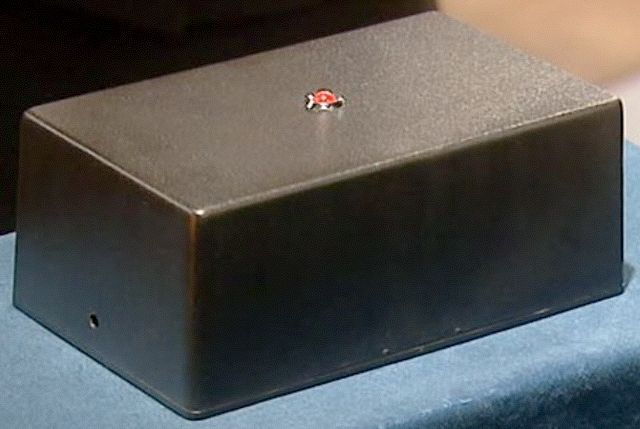
This weeks IT Crowd revealed to the world about the secret masters who control the Internet, which is, in fact, a box that is normally kept at Big Ben for the best reception. These people are “The Elders of the Internet“
Who are these mysterious elders?
-
Fun with traffic – Taiwan
Here’s an amusing little video from Taiwan (fortunately, I don’t think anyone was too badly hurt.)
In Taiwan, scooters are supposed to drive on the right, and when they want to make a left turn they are supposed to cross straight across the intersection, then stop, reposition their scooter and continue to the left when the light has changed. In short, they are obligated to follow pedestrian rules.
One of the scooters on the right shows why you should obey traffic laws.
Incidentally, on more than one occasion, I’ve seen taxis perform this exact same maneuver. Now that’s really scary!
Link found at The Real Taiwan
-
Killer plants can be fun
Looks like the BBC is (again) remaking John Wyndham’s Day of the Triffids.
No complaints here, I love that story, and the whole notion of the entire planet being blinded by a natural events rings so plausible.
Well, Assuming such an event would occur, who wouldn’t look up at it? And then it’s too late – you’re plant food.