Tag: Review

  • Doctor Who – The Beast Below – Review – Spoilers

    “Say, ‘Whee!’” – the Doctor

    I’ll skip the usual synopsis/analysis section and cut right to the bone: this was another fine episode of Doctor Who. With only two episodes of Smith’s reign and Moffat’s stewardship, I could hardly be happier with their start.

    This episode we get to see Smith in all his gangly, oddly walking Time Lord glory and he really does fit perfectly. I’m convinced now that he’s not aping Troughton and Davison, but that’s he’s settled on a persona that bears resemblances to them without being the copies. It’s perhaps the best example of “same man, different face” that we’ve yet seen in the actors who play the Doctor.

    For the first time ever, the Doctor finds himself in a truly unwinnable situation: He has three choices and in all of them innocents will be grievously harmed or killed. Gone is Russell T. Davies “the Doctor is an absolute moral compass” – or perhaps it’s still there, but we realize even with a compass, sometimes life’s decisions are about taking the least of bad situations.

    In the previous episode, the only thing that bothered me about the story was the fact that there were so many coma victims in such a small town, in this episode there were several points that bothered me:

    • Why did the smilers have rotating heads? Each smiler has three expressions, “Happy”, “Sad” and “Angry”, yet only two sides to their face – front and back. When ‘happy’ turned to ‘sad’ and then ‘sad’ turned to ‘angry’, the ‘happy’ face must somehow have been transmogrified to the ‘angry’ one. If the face could be changed, why bother rotating?
    • If the space whale refused to eat children over the course of their 200+ year flight, why did they continue to feed the children to them? Wishful thinking?
    • Having had the children not eaten, what do they do with them? Did they just collect the “zeroes” down in the tower?
    • When the children were inside the whale, as the Doctor and Amy were, how could the whale tell that it had children in its mouth rather than adults?
    • What was the point of having the recorded statement for the “protest/forget” voting booths? If you protested, you were killed, if you chose to forget, surely they would never let you see the recorded statement, otherwise, you could just tell yourself what you were about to forget.

    All that said, all is forgiven for this story, a truly unique Doctor Who story.

    Next week, the Daleks – I can already tell that I don’t like the idea of a phone-line to the TARDIS.

  • Doctor Who – The Eleventh Hour – Review – Spoilers

    Matt Smith has made his debut as the Doctor in Steven Moffat’s new series of Doctor Who.

    Beware of the spoilers and keep reading after the jump if you care not of them…

    (more…)

  • New MacBook Pro – Initial reactions

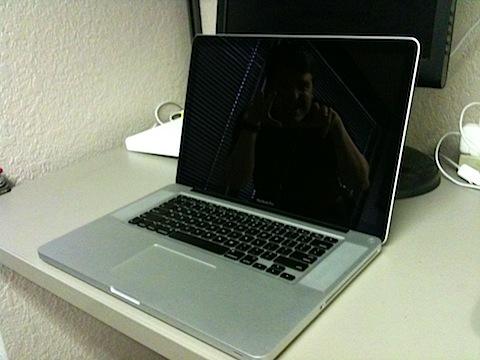
    Haunted MacBook Pro By now you all know the sad tale of my home being burglarized last month and the villains getting both my wife’s laptop and her iMac. Luckily, my old laptop was with me, or it I have no doubt would be gone, too. My wife decided she didn’t need a desktop and a laptop and opted to get just a replacement laptop. And so, as a consequence, I’ve decided to sell my MacBook, which was getting a bit long in the tooth and replacing it with a newer, bigger model. Effectively, we’ve been reduced by one computer.

    My new laptop is a MacBook Pro 15″ model, with the 2.66 GHz processor. (Shown in the picture with a phantom in the screen).

    Like many people, I had to play the “should I buy or should I wait?” game. Rumors have been flying for weeks that a refresh to the MacBook Pros are due and while I doubt the prices would go down, certainly specs would go up, but in the end, I decided I’d rather have a nice, stable model, which already has plenty of horsepower.

    So far, I think it’s pretty fantastic. I was put off by the unibody, sealed battery design, but in my first test, I got five full hours of near continuous use. Not quite Apple’s estimated seven hours, but by far the longest I’ve ever seen a laptop run on a single charge. There is a noticeable difference in the battery drain when using the high-energy consumption video subsystem, and after the first hour, I switched that off.

    In comparison to my old MacBook (first generation) here are the things that really stand out:

    1. The LED backlit screen really pops.
    2. It’s obviously much faster
    3. The backlit keyboard is really nice in a darkened room, but at an angle, makes the whole computer look like a xmas tree because of light spilling out from under the keys.
    4. The light sensitive display takes some getting used to. The brightness will adjust if someone walks in front of your light source. It’s very quick and distracting.
    5. The larger speakers make for better sound
    6. The SD card reader… I haven’t used. The bastards stole our camera, too.
    7. The no-button trackpad is great – once you get used to it. After only one day, it’s hard to use the old MacBook’s pad because I forget I have to click the button. It’s cool to be able to write Chinese by just drawing the character on the pad, too.
    8. I’m not sure I like the feel of the aluminum. I almost feel like it’s always going to slip out of my hands.

    So after one day, it’s thumbs up all the way. For now.

  • Doctor Who – The End of Time – I’m still not going to review this mess…

    …but,, here’s someone else’s review that hits on about 1/3 to 1/2 of the things that really irritated me about this dismal failure of a regeneration story.

    From Behind the Sofa – Return of the Fan****king

    Yeah, I welled up. Incredibly, I was still crying when I noticed that the glass doors weren’t even sealed. There are clearly gaps between the panes of glass so how the radiation is contained is anyone’s guess. But I went with it anyway. I was practically chewing the carpet in anguish when the Doctor started raging about how it wasn’t fair, and how a part of him really wanted to just leave the old fart to die. But when he bravely opened that door I was blubbing like a baby. And then he died… a bit like Spock (and Spock dying always makes me cry) and then… and then…

    Look, I’m happy to cry as much as the next fanboy, but I can’t do it for 20 minutes straight. It’s too much to ask of me. If the Doctor had regenerated there and then I would have been happy. Well, infinitely sad, but you know what I mean. So what if the preceding 40 minutes had been utter nonsense, at least that moment would have been unforgettable and beautiful and simple and timeless – but no. Oh God no. Instead we get 20 minutes – 20 MINUTES – of Russell T. Davies slapping himself on the back in a self-congratulatory coda that simply beggars belief.

    Move over Graham Crowden, this death goes on for so long you’ll need two YouTube links to see it all.


    Please… go read the rest of it, so I won’t have to write anything about this episode. Please. Don’t make me write about this. Please…. the drumming, the ceaseless drumming in my head!

    Ahhh, suddenly I’m fondly remembering the skill and panache of the Baker => McCoy regeneration.

  • Doctor Who – The End of Time – Reasonably Spoiler Free

    Apparently Russell T. Davies had one last, constipated bowel moment to crap upon us before he departed.

  • Ginger Beer – Less Superficial

    A few days ago, I posted some thoughts (barely that) on Ginger Beer vs Ginger Ale.IMG_0399

    I had planned on it being a very thoughtful and thorough exploration of my introduction to Ginger Beer, but I just hated the way I started off on each attempt to write it and I finally ended up with a graffiti-like blog post instead of deep, rewarding essay on the subject.

    Oh, who am I kidding? It’s soda pop. Mostly.

    I’m going to admit that for at least 18 years of my life being completely ignorant of ginger beer, and being nearly completely ignorant of it for the next 26 years. (In fact, the only mention of “Ginger Beer” I’d ever heard was on Doctor Who – Android Invasion, if you must know – and I assumed (incorrectly) that ginger beer was just one of those quaint English renames of something that’s already got a perfectly good name in American English. Specifically, I thought it was ginger ale.

    Rather than waste a lot of time, see wikipedia regarding ginger beer and ginger ale.

    I don’t really like ginger ale (there’s a story there, too) and so I haven’t really given this whole thing much thought over the years; however, I can’t remember why, but two weeks ago, something made me curious about ginger beer. Curious enough to look it up in wikipedia, but not curious enough to look up ginger ale. My conclusion was that, if ginger beer is stronger than ginger ale and don’t like ginger ale, I’m certainly not going to like ginger beer.

    Three days ago we stopped in Cost Plus to kill some time, and with that odd synchronicity that the law of large number throws at us and make people falsely believe in psychic powers, I found myself standing in front of a display of ginger beer bottles. I have never seen it for sale in the US before.

    And so I decided to give it a try. There were several brands, none which came from England, but there was one with a kangaroo on the front (and, indeed it came from Australia) so I chose that.

    (Everyone knows that Australian wines are so much superior to other countries’ because of the enormous size and hopping power of the kangaroo’s feet and legs when harnessed for the pressing of the grapes. It seemed logical that the advantage could be carried over into the production of ginger beer.)

    Bundaberg Ginger Beer is awesome. Sweet, gingery and tasty.

    The funny part was, as I said, on the whole, I don’t like ginger ale, but that’s not to say I haven’t enjoyed ginger ale. Sometimes I’d had a ginger ale and it was taste pretty darned good, but most of the time, it’s quite unpleasant to my palette. This ginger beer tasted of all the best in ginger ale, but stronger. Yum. (“Yum? Not Yum-O?” Yes, ‘yum.’ I refuse to say, “yum-o” even when it’s salaciously written across Rachel Ray’s breasts.)

    This observation fired up my very natural and rather expansive sense of curiosity. (Just to be clear: Curiosity about the taste of ginger beer/ginger ale, not about the taste or any other attribute of Rachel Ray’s breasts. If it had, that would deserve a blog post all its own and besides, I try to keep this blog PG-13 at worst – unless it’s about the Seal People.)

    So I started studying ginger ale a bit and that’s when I learned about “golden” and “dry” ginger ale. Dry ginger ale is most popular in America and tastes like slightly sweetened carbonated water – in other words, I finally understand why I don’t like ginger ale. It became popular as a mixer – in other words, its not meant to be drunk, just mixed with alcohol to try to kill he awful alcohol taste. The more awful the alcohol, the better dry ginger ale is. (See: Prohibition.)

    Golden ginger ale, on the other hand is the more original form, sweeter, more flavorful and much harder to find in the US. Obviously these have been the rare instances when I’ve enjoyed ginger ale. Mystery solved.

    So back to the ginger beer, which has more in common with golden ginger ale than dry ginger ale.

    Perhaps. Or perhaps not. Another trip to Cost Plus and I loaded up with several bottles of each brand of ginger beer available.

    Reed’s Jamaican Style Ginger Beer tastes like a bad white wine cooler, without the “benefit” of alcohol. Bitter.

    Ginger Beer from The Ginger People. The bottle says are the winner of the “Most Outstanding Beverage” award from Nation Association for the Specialty Food Trade. It was sweet, gingery tasty and very reminiscent of the Bundaberg ginger beer, but with a curiously odd aftertaste that reminds me of the smell of an auto parts store. That’s a bit off-putting. I’ve never been too keen on drinking things that remind me of industrial manufacturing and chemicals.

    (Let me be clear, I’m not opposed to foods that are industrially manufactured or full of chemicals, I just don’t want to be reminded of it with every taste.)

    Finally there was Fentiman’s Ginger Beer, from England. This one was different because it was alcoholic, although just barely. I had to tip this one down the drain as I couldn’t finish it, nor could I describe the flavor.

    In conclusion…3 out of 4 I didn’t really like. Perhaps I don’t really like ginger beer after all.

  • JVC KD-R800 iPhone Compatible Car Stereo Review

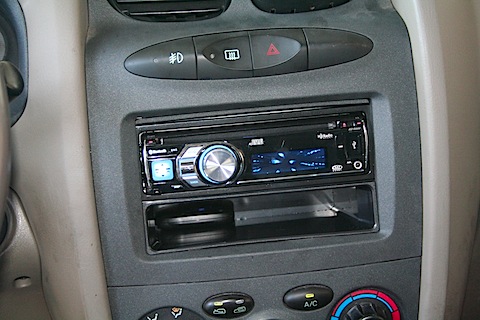
    IMG_2809 It’s been a few days since I had this new JVC stereo unit installed, and I’ve now taken several “trips” with it, plus I’ve tried to test out all the features I’m likely to ever use.

    Background

    I love music. I listen to lots of music – eclectic music, perhaps, but I’m never far from my music. I’ve always required that I be able to take the music I want to listen to in my car. If that meant making my own cassette tapes, or CDs or whatever, I’ve always found a way to get my music in my car.

    To me, the iPod is a revolution. The idea of “all of your music in your pocket” is enormously compelling to me. Since I got my first iPod, iPod integration into my stereo system has been high on my wish list. These days, though, new stereo equipment isn’t high on the “have I got money to spend” list, so I’ve had to make do in my current vehicle with the factory stereo.

    First I tried those cassette adaptors. Wow, do they suck, especially since everybody’s tape decks are auto-reverse these days. Even the ones supposedly built for auto-reverse decks soon break and start madly switching back and forth.

    I tried FM transmitters. Wow, do they suck, especially in Phoenix where every space on the dial has a station or interference from a station. (And why is it every time I come within 30 feet of a city bus the station is drowned out in static?)

    The holy grail of iPod integration for me would be a directly connected wire from the iPod’s dock connector to the stereo – you know, like Steve Jobs announced being built into all BMWs, years ago. Of course, stereo manufacturers started making these types of systems, and I was about to buy one when fate threw me a curveball: I got an iPhone.

    The iPhone, while sharing the same dock connector, isn’t quite the same, and all the stereos on the market that worked fine for an iPod would not work for an iPhone.

    I was back to square one – except that FM transmitters are even flakier on an iPhone due to the radio transmitter in the phone.

    And so I waited. I waited and I periodically looked online for reviews of “iPhone compatible” car stereos. Finally, a couple weeks ago, things turned promising and I found a unit I was prepared to gamble on. I purchased a JVC KD-R800 via Amazon.com for $149.

    Review

    Here are the features that I consider meaningful on the unit.

    It has two USB ports, one front and one in the back which can be snaked over into the glove box. You can plug in a USB key, USB HDD or MP3 player of that ilk and it will play the MP3s and WMAs. Most importantly those two ports (and the unit itself) are branded with the official “Made for iPod” and “Works with iPhone” monikers from Apple.

    The unit has an auxiliary in port on the front which every stereo on the planet ought to have. That said, I have no use for it because of the USB ports, but it seems like a reasonable feature to have as a fallback should I ever wish to hook up some other varied and sundry device.

    It plays CDs and, in keeping with virtually every any modern stereo, it plays MP3 CDs. I still have some of both, although virtually everything I have is on my iPhone, but you never can tell what might come along.

    Finally, the last feature of some note is the Bluetooth connectivity. The unit is both a hands-free phone kit (and has a mountable microphone) and can play music streamed over bluetooth. Both of which are supported by my iPhone 3GS. I’m not too keen on the Bluetooth connectivity, as I’ll explain, but again, it does present a reasonable alternative and certainly should be a selling point of the stereo.

    The reason I’m not really keen on the Bluetooth is two-fold. First, it is two different things, the phone and the music streaming. The phone part isn’t very useful to me because, in the last 8 or so years since I’ve owned a mobile phone, I have received perhaps 5 calls which I was driving, and I never call anyone while I’m driving. That’s not because I’m one of those “you shouldn’t use a cell phone while you’re driving” people (although I am), it’s because, in most months, my phone usage can be measured on double-digit minutes – and often I barely reach double-digits. I don’t talk on the phone, therefore the Bluetooth phone connectivity is not likely to get a workout from me.

    The music streaming, while, I suppose might be nifty-keen, has no interest at all to me. Since I don’t gab on the phone, I don’t use my phone in the car. I don’t send text messages or e-mails, although once in a while I do use the Google Maps. I’d much rather have the phone sitting in the glovebox – being charged – sending music to the stereo over the wire than hanging on my hip or sitting in the front seat streaming music wirelessly and running the battery down.

    In short, Bluetooth is not a make or break feature for me. Plug iPhone in and play music is the make or break feature for me.

    (I should note that this unit also plays FM and AM radio stations and has optional “modules” you can buy to add both satellite radio and/or HD radio, but I hope to never listen to another radio station again now that I have iPod/iPhone connectivity.)

    My first “surprise” out of the box was that this “Bluetooth stereo” doesn’t actually have built-in Bluetooth. It has a supplied Bluetooth module that plugs into one of the two USB ports. It would appear that Bluetooth is not legal in all jurisdictions that this unit is marketed in and so it is not part of the actual unit. That’s bad because if I use it, I loose a USB port. Do I need two USB ports? That is the question.

    Let’s go over the various functions:

    USB iPhone connection.

    Works great, sounds good, zero configuration. I plugged it in and my iPhone started playing music immediately.

    The current track playing shows on the display, (but not the album or artists, as far as I can tell) and it does not support Japanese or Chinese character sets. (I have a significant number of songs with titles in foreign languages, which the iPhone itself has no problem with.)

    The iPhone can be controlled by the wheel on the front of the unit and it’s much like a standard iPod “click wheel” operation. The top level gives you things like “Playlists,” “Genres,” “Artists,” “Podcasts,” etc, and each push of the wheel selects a lower level. There is no support for videos or the new Genius Mixes.

    Everything worked great if I plugged it in to either the front or back USB port. Up to this point it was 100% problem-free. (Cue ominous music.)

    FM radio

    It works. There are no preset buttons, but there are presets. You have to access them via click-wheel menu, which is not the most convenient system, but I rarely have more than 2 or 3 stations programmed in. Making up (perhaps) for the lack of physical buttons, you seem to be able to store an awful lot of presets, although I haven’t counted how many.

    Bluetooth

    After everything important was working, I concentrated on the Bluetooth. I very nearly didn’t install it, but since the install place (Arizona Sound) did such a nice job of installing the microphone up near the sun visor, I felt I had to at least try it out.

    Pairing the Bluetooth was simple. I input a security code on the unit, turned on Bluetooth on my phone and the units paired right up. On the stereo the iPhone appears as two devices – one phone, one audio.

    I was immediately able to place a call from the unit, and I found my contacts waiting for me on the menus. Still, it’s a bit difficult to scroll through the whole list 3 names at a time and I’ve since learned that you can select (on the iPhone) which contacts to share over the Bluetooth, so I’ll be making a small group of people I’m likely to ever want to call.

    I was not immediately able to receive a call. The phone chirped away in the glovebox, and no display came up or other indication came from the stereo. Nor could I press the “phone” button to answer it. I have no idea why this happened, because the next time I started the car, it worked fine.

    Call quality was good. People had no trouble hearing me over the sound of the car, and they came through the car speakers crystal clear – or at least as crystal clear as you ever get on an AT&T iPhone. (Yes, that’s a dig at AT&T.)

    Bluetooth audio. Initially, I couldn’t think of a reason to try it, so I didn’t. More on that later.

    Problems?

    After getting the Bluetooth working, we drove across town for dinner, listening to music from the phone. It was delightful. Even though the underlying equipment (speakers, etc) are all the original factory equipment, this new stereo sounds better. There’s better definition in the stereo separation and I’m hearing more subtle details in the music. In short, It worked perfectly.

    Until we headed back home after dinner.

    I plugged the iPhone in and the music picked up right where it left off. I began to back out of the parking spot and got half out and the music stopped. It wasn’t paused as the display continued to mark the elapsed time and display the current song, but there was no sound.

    I unplugged the iPhone and plugged it back in and it picked up immediately again, but with no sound.

    I turned the unit off and repeated the procedure. This time the music came back, but only for about 20 seconds.

    I dinked around with it with various combinations of plugging and unplugging, turning the stereo off, turning the car off and finally, with no discernible pattern, it worked and didn’t kick off. We drove back across town (about 30 minutes) without a hitch. Strange.

    Frankly, I was not happy.

    I did some online searching, but found nothing. Then an idea hit me. What if this is something to do with the Bluetooth audio streaming?

    I took the phone out, hooked it up, started the car and, sure enough, the problem was back. Twenty seconds of music and it went quiet. Unplugging and replugging the phone made no different, so I turned the Bluetooth off on the phone and presto my sound came back. So now the question was, “Was it a problem with the stereo or the iPhone?” iPhones have notoriously poor Bluetooth support, so I couldn’t rule that out.

    Unfortunately, there’s not much in the iPhone’s Bluetooth configuration for the JVC device, and, perhaps significantly, the JVC unit appears as one device.

    I checked the Bluetooth settings on the stereo, and it shows the iPhone as two devices. I deleted the audio pairing, turned the iPhone’s Bluetooth back on and everything seemed to work fine.

    On my next trip, the sound stopped again, and when I checked the Bluetooth settings, the audio Bluetooth device was back.

    After much fiddling, I’ve stumbled across a provisional hypothesis as to what’s happening and how to circumvent it. It’s worked so far, but it remains to be seen if it proves true.

    My hypothesis is that, when I turn on the stereo, it and the phone have to connect. If I plug in the dock connector before the devices have paired up, audio gets sucked away from the USB connection once the pairing is made. To see if that hypothesis is correct, I now start my car and make sure that the iPhone’s Bluetooth indicator has connected before I connect the USB cable.

    So far it’s worked.

    …and with that, and if it keeps working that way, I’m happy as a clam with this new unit.

    Update 9/30/2009 I finally decided to try using the Bluetooth audio streaming capabilities of the unit, just to see what it was like.

    Since I’m not really interested in the Bluetooth streaming, I only fiddled with it for a few minutes but the quality of the streaming audio left a lot to be desired. The sound kept dropping out as if the streaming buffer were overrun.

    I’ll be sticking with the USB audio.

  • Torchwood – Who are the monsters? (Er, Children of Earth) review, spoilers

    I loathe Torchwood. It is the Slitheen of the Doctor Who universe… oh, wait, the Slitheen are the Slitheen of the Doctor Who universe. In that case, Torchwood are the fart jokes of the Doctor Who universe – crude, boorish and juvenile. (While, at the same time, attempting to be all grown-up. “See, I can tell fart jokes, I’m an adult!”)

    A program so awful that, after series 2, episode 1, I just gave up, and apart from a few clips here and there that I’ve seen on TV or online, I banished it from consideration of watching ever again.

    …and then along came the reviews of Torchwood: Children of Earth. Reviews so positive and glowing, from blogs I generally trust to be reasonably compatible with my viewpoint, that it seemed impossible to reconcile with the train wreck that was Torchwood, series 1 and 2.

    Well, I just had to see for myself.

    Torchwood: Children of Earth is more of a mini-series than a normal year’s worth of episodes. It is one single story, aired (and told in five parts) over 5 consecutive days.

    Brief Synopsis without a lot of the details

    Nasty aliens come to Earth. They’ve been here before in the 1960’s and the British government gave in to blackmail back then and gave them 12 orphaned children to make them go away. Now the aliens are back and have announced themselves by “stopping” every child on Earth and speaking the words, “We are coming back.”

    The first order of business: The British government must find a way to cover up what they did back in 1965, that begins with killing everyone that might talk. One of them, the man who actually handed the children over, was Captain Jack Harkness of Torchwood. Torchwood, being what it is, an organization that investigates alien threats, must also be eliminated.

    Captain Jack, being immortal, cannot be killed. Or can he?

    A bomb is planted in his stomach (they have to kill him twice to get the bomb in him) and then he, and Torchwood’s HQ are blown into tiny parts. Ianto, Gwen and her husband Rhys go on the run from the assassins.

    The aliens arrive and demand 10% of all children on the planet Earth. The alternative: the total extinction of the human species.

    Jack pulls himself together (literally), so they encase him in cement, but Ianto and Co. rescue him.

    The governments of the world reluctantly agree to the aliens’ terms and begin planning how to deliver 10% of the children to the aliens. Meanwhile, Torchwood uses the last of their Torchwood technology to record what’s being discussed regarding the plans. They use this information to blackmail the British into letting them fight the aliens.

    Jack takes a valiant stand in front of the aliens, telling them that we’ll not give them our children and that we’ll fight. They aliens respond by killing the entire human race. Or they would have done if Thames House (where the aliens are represented) hadn’t been a bio-hazard lockable building. Instead of killing the whole world, they just kill everyone in the building, including Jack and Ianto.

    Jack gets better. Ianto doesn’t.

    Beaten and depleted, Torchwood gives up, and the government begins a campaign to round up 10% of the children, who will not be killed or eaten by the aliens, but will be permanently attached to the aliens’ bodies as a form of narcotic, where they will live as possibly still-sentient children indefinitely.

    The round ups begin, and Gwen and Rhys try to save Ianto’s niece and nephew and several other neighborhood children from the cull. Meanwhile Jack’s daughter convinces the one-time assassin who was trying to kill Jack that he is the only one who can save the world. They spring him from prison and he hits upon an idea that could kill the aliens, but it will require a sacrifice. He send a signal back at the aliens using the brain of a child and the only child available is his grandson.

    He saves the children of Earth by using his grandson and kills him in the process.

    The story ends with Jack leaving the Earth, perhaps forever.

    Analysis

    Here’s a series that is saved – no, lifted up – by some truly awesome performances.

    The supporting cast in this story, particularly the members of the British government, are exceptional. I can’t think of a better word for it. They are deep and nuanced in a way that has for decades set British acting above the rest in the world. Not the performances of the one-dimension heroes, but the performances of the “ordinary” people caught in extra-ordinary circumstances. Director Euros Lyn has also provided them a tight, dramatic canvas to work within and it comes off perfectly.

    If there’s a weak spot, it’s the story logic, but even that isn’t bad and it’s punctuated with moments of real, human dialog that rings so real as you might think it was surreptitiously recorded from strangers rather than scripted.

    Let’s get a couple things out of the way first before we get into the big questions. This series should not be set in the Doctor Who universe. This has become a major problem with the Doctor Who spin-offs. We can forgive the Doctor for not showing up for every Earth destructing event, but where was Martha Jones? Answer: on her honeymoon and Jack is forbidden to call her by Gwen. I must say, Martha’s husband’s “technique” must be mightily overwhelming that he was able to keep her totally oblivious to all the children on the whole planet stopping and chanting over the period of five days! For cryin’ out loud, didn’t those two at least stop to eat meals? Surely long enough to make a quick phone call to the Doctor. (I told you that damn inter-time, inter-universe cell phone was a stupid plot device that would kick them in the ass later, didn’t I?)

    What about Sarah Jane Smith. She’s got a kid in that age group, she hangs out with kids in that age group. Didn’t she notice? Where was Mr. Smith identifying the aliens, or at least the location of their ships or just finding ways to block their signal?

    No, this story needed to be isolated to convey the full menace of the situation and it wasn’t sufficiently. Further, by bringing up the Doctor once or twice, they reaffirm the interconnectedness of the whole thing.

    From this point forward, I’m going to grant them their isolation and pretend the rest of the Doctor Who universe doesn’t exist.

    A lot of the commentary I’ve read about this story revolves around the question of, “Who are the monsters?” That’s what I want to concentrate on mostly.

    The argument goes that the British government (and presumably the other governments of the world, too) are the monsters in this story, because of their machinations or perhaps Jack is for killing his own grandson. I want to be very clear on this point – The aliens are the monsters.

    The aliens come to Earth, threaten to kill everyone and demand blackmail. For the sake of this story, we have to take it as read that the alien threat is credible and that there is no doubt that they would follow-through. Also, we have to recognize that there is no time to craft an adequate defense plan. In the five days since the beginning of the incident, the knowledge of the aliens obtained is virtually nil. We don’t know where they’re from, how many there are, what the total of the defensive and offensive military might be. There’s no one to fight, no time to fight them, nothing to fight them with and no second chance.  Given that premise, what would you do?

    It’s all well and good to say, “Yeah, I’d fight back.” Jack started to do that, and it was foolhardy and stupid. What was he going to do? Pose until the aliens we awed by his movie-star good looks?

    Sometimes in this world you’re beaten and the phrase, “He who fights and runs away lives to fight another day,” is never more relevant. Sometimes capitulation is the only option.

    To give up 10% of the children to be used in what promises to be a horribly agonizing not-quite-death is distasteful (putting it mildly) but is that worse than condemning those same children to certain death, along with the other 90% and along with the rest of the planet?

    It’s not a simple economic equation but, to Russell T. Davies’ credit, that’s the point of the whole story. People making very difficult decisions makes for good drama. And when the difficult decisions have no good answer, the drama can be even more intense. This choice between 10% of the kids and the entire species isn’t reality. It’s an absurd exaggeration that allows writers to explore human nature. That is, at its best, what Science Fiction is all about – the ability to play out scenarios that simply cannot happen and deconstruct the human element.

    The discussion around the cabinet table about how to choose the children was the high point of the show. It rang so very real and, given the lack of time, I probably would have come to a similar solution. Given more time, other solutions (whole or partial) might come to mind – children dying in hospital, families with many children who really are on the dole, starving children in third-world countries. Again, nothing tasteful, but recognizing the reality of the situation and trying to minimize the overall damage as much as possible.

    All that is to the writers’ credit (and what’s up with a single story being written in parts by different people?) for using the medium of Science Fiction to its potential.

    But… Why did the aliens go about things the way they did? Did that really make sense? They can make the kids all stop and talk and point. It seems reasonable that they could make them walk. We know that have some level of granularity over their control because they can make different nations’ children speak different numbers. Why did they need to go through the ambassadorial rigamarole? Why not just walk the kids to collection points and hoover them up before anybody could even figure out what they were doing?

    And, assuming they had some reason to go to the government, why establish quotas for each one? Why not go to India or China and force them to turn over 50% of their kids?

    I think the answer is that this is just a contrived convenience to try to tell the story about the British government (oh, ahh, that’s obvious.)   

    Obvious though that may be, it does make the alien threat seem more implausible. Rather than just do the job themselves, the aliens are forcing all the governments to do the dirty work, despite the fact that the approach would be inefficient and unlikely to achieve their goals in the shortest length of time, What if one single government refused or failed? Would they kill the whole human race? Would another government cough up additional children to make up the difference to avoid annihilation? Would that be more wrong than turning over the 10%? Does that then raise the issue of “not my kids” as was raised at the cabinet?

    No, I’ll argue that the solution that the cabinet came up with does not make them monsters. What was monstrous was the attempts to cover it up. Oh, I don’t mean the false inoculation program, obviously the had to lie in order to get the children, but the unwillingness to stand behind their decisions, difficult though they were, made the Prime Minister, in particular, abhorrent.

    So let’s turn, finally, to Captain Jack Harkness – immortal man.

    One of my complaints about Torchwood is that Jack is… wrong. I don’t mean wrong in the same way a Time Lord just feels he’s wrong, but wrong in the sense that he isn’t portrayed accurately. This is not an indictment of John Barrowman.

    Consider: As the series has progressed, we know more and more about how old Jack really is. I gather he was buried under Cardiff for a thousand years or so, but I’m not sure if he was conscious, but at the very least Jack has 150+ years of consciousness, and he’s used to seeing everyone die around him. It’s hard to imagine that Jack would behave recognizably like a human at all. The fact that he does act, for the most part, normal, leaves a deceptively false sense of familiarity.

    Jack’s solution to the alien 456 is to destructively use his grandson as a weapon. Is that morally different from being willing to sacrifice 10%? Jack wasn’t willing to give up the 10% to save the others, but he was willing to kill one. The moral dilemma is the same, but his choice is the opposite. What changed his mind? Recognition of the futility of his earlier position? Revenge for the death of Ianto? Or a different perspective on death? Does he see a moral difference because in both cases he chose to fight? If he could have poisoned the 10% of the children so that they would have killed the 456, would he have gone along with that?

    Heroically, I have no doubt that Jack would have laid down his life (such as it is) to save the children. I’m sure Gwen or Ianto, or perhaps even Froebisher would have laid down their lives too.

    But that wasn’t the choice available to any of them.

    Does the immortal Jack Harkness even comprehend death as we do? A mortal man could easily imagine that, in the normal course of life, his children or grandchildren will outlive him. Not so with Jack. He knows that it is just a matter of time before the boy dies anyway. Does that perspective change the morality of his decision?

    In this, ultimately, the writers of Torchwood: Children of Earth have left us with more questions than answers and they have given us the chance to look, briefly, into the depths of the human mind.

    For that reason, I recommend this series as an exceptional throwback to the days Nigel Kneale and John Wyndham.

    But whatever you do… Don’t watch Torchwood series one or two!
  • Primeval – Series 3, Episode 9 – Review, Spoilers

    Well, New Zealand are out of the World Twenty20, so it’s time to review this episode of Primeval I overlooked. (OK, I intentionally overlooked it the first time around.)

    Synopsis

    We open with a peaceful, pastoral countryside, suddenly disrupted by horrifying freaks of nature: A camp full of young people with ATVs. But there’s more than just modern horrors in the woods, there’s also embolotherium. A prehistoric rhino-like creature. In fact, there’s a whole heard of them and they don’t half make a mess of a guy on an ATV.

    Meanwhile, Danny Quinn is following up on the mysterious woman from the future who was captured by Christine Johnson’s military. Despite Lester’s warnings, Quinn breaks into Johnson’s facility after he sees the woman being held captive inside.

    Under interrogation, the mystery woman reveals that, in the future, everyone is dead. Killed by the predators, but she doesn’t know where they came from. She also reveals that anomalies are rips in time, and that they are “everywhere”, but that some of them are invisible. She indicates that she knows how to find them, but she must talk to the people at the ARC. She is also in possession of a device which she refuses to explain.

    Danny breaks her out.

    At the campsite, the rest of the team go through the typical plot complications trying to get the embolotherium back through the anomaly, which closes before all of them are through.

    Danny arrives with the mystery woman just as a stampede causes the embolotherium to thunder towards the unsuspecting campers. Just as all looks lost, the mystery woman uses the device to open an anomaly right in front of the camp and sends the herd through.

    Dumbstruck, Danny takes her to the ARC, but not before stealing her notebook and giving it to Sarah to decode. The mystery woman, in turn, steals a gun.

    Johnson hasn’t been taking Danny’s intrusion sitting down, and is at the ARC serving Lester with a warrant for Quinn’s arrest and the surrender of the artifact.

    Danny arrives and is arrested, but then the mystery woman reveals that she is Helen Cutter using future disguise technology. She explains that she had to kill Nick Cutter to save the world, but that it didn’t work, and so she has to make sure it works next time. She kidnaps Johnson, takes the artifact and heads back to Johnson’s headquarters and her private anomaly.

    She tells Johnson that she specifically is the civil servant that caused the entire destruction of the world by the predators, and she takes her through the anomaly, where she’s killed by a future predator. Helen also closes off Johnson’s anomaly after she’s dead.

    Danny Quinn vows to chase Helen to the ends of time to stop her.

    Analysis

    I purposely didn’t write this one up because there’s so little to recommend this episode.

    The episode adds a new piece to the equation: That there are lots of anomalies everywhere, but that they are somehow invisible/inaccessible. The device Helen has seems to be able to locate and open them. Also, for the first time, there’s some indication that Conner’s anomaly detectors experience some form of crude interference when near a closed anomaly. There’s never been any mention of this before and they’ve been standing next to several closed anomalies in the past. Even still, when the interference is introduced into the show, it’s not very clear what it is or why it is important. It’s not used or mentioned again.

    It’s somewhat interesting that, when Helen killed Cutter in an earlier episode, she blamed the ARC for the release of the predators and the destruction of the world. In this episode she blames Christine Johnson. Is she just guessing? If she was right, did she create a new kind of time paradox by taking Christine into a future that she created and killing her there before she could create that very same future? Is Helen just bat-shit crazy?

    Perhaps it will all make sense in the next and final episode? (Don’t hold your breath.)

  • Primeval – A Tale of Three Cliffhangers

    Cliffhangers. The bane of modern television and the province of hack writers.

    Oh sure, cliffhangers have been around for a long time, they go back at least as far as the Saturday-afternoon movie series of the 30s. Cleverly designed stories intended to get the kids back each week to spend their hard-earned cash.

    Did it go back further? Did cliffhanger vaudeville shows exist? What about live theatre? DId Shakespeare ever write a cliffhanger?

    When is a cliffhanger an important plot device rather than a cheat to the audience that forces them to return to get the rest of the story?

    Even if you didn’t pay money, you’ve invested your time. At what point were you cheated out of your time by the writer stopping in the middle of a story and saying, “See ya’ later!”?

    Rarely did this used to happen in “real” movies. The first I can recall, The Empire Strikes Back, was a horrible cheat. The story had no resolution at all and was nothing more than a setup for the third and final movie. Given the choice, I would have preferred to wait and watch both at the same time, rather than waiting years between them.

    TV series began this sort of thing sometime back in the 80’s (As I recall, anyway). Presumably as a means to get viewers to write the networks and demand their show be renewed. Cliffhanger? Artistic statement or cynical attempt to manipulate the public?

    As you may have ascertained, I’m of dual-mind on the subject. When I know, in advance and with my own agreement that a story is a cliffhanger, I have no problem with it. When there’s a four-part Doctor Who, I know parts one, two and three are going to end of a (sometimes horribly lame) cliffhanger, but I also know the story will completed and the end of part four and that my investment of time will be rewarded. (Horns of Nimon, notwithstanding.)

    So, let’s look at Primeval. I gather that Primeval is taking a week off and next week will be back with the series’ finale. I also gather that DVDs of the third series are already “in the wild” and you only need do a few minutes research on the net and you’ll know what happens next week. For the sake of disclosure, I might through this discourse reveal spoilers about the finale, as it’s been spoiled for me.

    Let’s start at the beginning with series one.

    Anomalies started forming, strange creatures were getting through. Paleontologist Nick Cutter accidentally (or through the intervention of his missing wife) gets drawn into the story. Also, Stephen his assistant, Conner a student and Abby a zoo worker are drawn in. They get bound up by the Official Secrets act and start working with Lester and Claudia Brown. In the first episode, with an anomaly open to the Permian, Cutter goes through and finds a dead human skeleton and a camera. When the pictures are developed, they are of his missing wife, Helen.

    We have a mystery – several actually. What are the anomalies? Who is the dead person? What does Helen know?

    Through the series, we learn nothing about the anomalies. They are, as best we can tell, freak natural events with no rhyme or pattern. We do learn, slowly, that Helen knows something about them and that she has some connection with Stephen.

    We learn that there are “junction points” of anomalies, where multiple anomalies exist, which Helen seems to be able to navigate.

    Finally, a terrifying future predator comes through the Permian anomaly (apparently another anomaly exists in the Permian which leads to the future.) Cutter, along with Helen and military backup take some orphaned (Cutter thinks) baby future predators through the anomaly in an attempt to find the future anomaly, but they escape in the Permian.

    Cutter realizes, too late, that this second Permian anomaly isn’t exactly the same as before. It now leads to an earlier point in the Permian. One of the team is killed (leaving the human skeleton that Cutter found previously (in the past’s future) and Cutter also takes the photos of Helen that they retrieved from the camera.

    Escaping with lives, Helen and Cutter return to the present, not realizing that baby predators were left behind.

    In the present, Helen reveals that she plans to continue exploring the anomalies and drops the bombshell on Cutter that she had an affair with his trusted friend and confidant, Stephen, then escapes into the closing anomaly.

    Only then does Cutter learn that Claudia Brown has ceased to exist and no one remembers her except himself. End of series one.

    Let’s look at that cliffhanger a little in regards to the context of the series.

    There were really two mysteries in the first series. One was the anomalies themselves and nothing really was learned about them at all. They started for no apparent reason, appeared with no apparent pattern, and had no apparent one-to-one relationship between time and space. They were presented as almost a force of nature – one that is not understood, but cannot be avoided. It’s the mystery that is not to be solved. Perhaps it has no solution.

    But there was a mystery or two that could be solved: Who was the dead body, and what was Helen doing having her picture taken in the Permian? These mysteries were cleared up. The writers gave us the answers that they had been promising. The cliffhanger, with Claudia Brown being going and time being changed was new, unexpected and a teaser. I can’t say I liked it, but it was a surprise new mystery.

    In the second series, once again, we’re presented with a series of mysteries. The anomalies continue in pretty much the same fashion, albeit with the added factor of Conner’s anomaly detector telling them where they are.

    In the second series, we wonder who is the traitor at the ARC? When we learn it is Leak, we wonder what’s he up to? Will Stephen be fooled by Helen? Will he betray his friends? How dumb can Conner be about his girlfriend? Who is the mysterious “Cleaner” who dies in the first episode but shows up again and again?

    By the end of the series, all these questions have been answered, with the possible exception of the identity of the Cleaner. At least we are informed at the end that he is not one indestructible person, but an army of identical individuals. There’s not much of a cliffhanger in series two. It’s more Helen pointing out that time can be changed and that, perhaps, she’ll be bringing Stephen back. No cliffhanger is really needed, because after the first series started airing, Primeval was guaranteed two more series production.

    Now we come to the third series. Ratings have been steadily declining, but the series is still popular. Ad revenue is down, but the cost of the show is high. The fate of Primeval is uncertain.

    This year we start to learn something about the anomalies. They’re been around forever. (Well, obvious really, since know they go back at least as far as the Silurian.) More than that, they’ve been around throughout human history, undetected. They can be predicted, first by Cutter’s model, then by the mysterious future ARC artifact. They can be controlled with a proper (again future ARC) device. There is another government conspiracy aiming to use the anomalies for purpose or purposes unknown. They can be captured and moved using magnetism. They can be locked down. They have something to do with a mysterious government project from before the second world war. Finally, at last, the mystery of the anomalies is beginning to unravel.

    Helen’s back, and she’s got a new mystery. She has seen the future. Mankind has been destroyed by the future predators. For some reason, she blames the ARC and Nick Cutter for unleashing the predators on the world. She has a crusade to save the world and she is so fanatical she kills Cutter to prevent the future she has seen. It doesn’t work. The mysterious artifact from the future has some purpose, but what?

    So how do we fare by the end of the third series? In, we learn nothing about the cause of the anomalies. Do the mysterious future devices create them or simply open and close existing one. Looking at episodes 9 and 10, it seems in episode 9 they can open one anywhere, but in 10 you have to seek them out – and they clearly can’t be opened to just any point in time and space. We learn nothing about the pre-war project, in fact, the team ignore it completely. We know nothing of Christine Johnson’s military project. They do nothing with the ability to move anomalies. We learn that, in the future, the ARC has the technology to map and to open and close anomalies, nothing more. From episode 9 to episode 10, Helen’s plan to save mankind from destruction at the hands of the future predators suddenly becomes a plan to save the big, beautiful Earth from mean old mankind instead. All she had to do was look at the future without man to realize that the world didn’t need saving, it took care of it itself. Her madness dies with her at the end of the series. So, with the exception of Helen attempting to stop… something, all the mysteries in series three are left unanswered. On top to that, they strand Danny in the Pliocene, and Abby and Conner up a tree in the Cretaceous.

    This is a series’ ending designed nothing more than to irritate people into demanding another series of Primeval, but perhaps they’ve forgotten the most important thing. If you shit on your audience too often, they don’t always come back.